



How to Choose PVC Conduit?
I. Classification by Mechanical Properties: Lightweight, Medium-weight, Heavy-duty
Based on the different mechanical strengths of PVC electrical conduits, they can be divided into the following three categories:
Lightweight (Code: 2)
- Thin walls, lightweight, easy to install;
- Suitable for applications without external impact;
- Commonly used for ceiling wiring, low-voltage wiring within walls, etc.
Features: Lightweight and easy to install, but not suitable for bearing external forces or underground installation.
For ceiling or wall wiring, lightweight conduits save materials and are easy to install, making them ideal for low-stress environments.
Medium-weight (Code: 3)
- Moderate wall thickness, balanced pressure and impact resistance;
- Mostly used in home wiring, office buildings, and other conventional construction environments.
Features: Sufficient strength, most widely used, and the first choice for home renovations and light to medium-sized projects.
Medium-weight conduits are not easily deformed during installation and are not bulky, making them suitable for most ordinary environments.
Heavy Duty (Code: 4)
- Thicker wall thickness and strongest load-bearing capacity;
- Outstanding pressure resistance and impact resistance;
- Commonly used in high-intensity environments such as ground burial and concrete embedding.
Features: High strength, designed for heavy loads.
If buried in the ground or poured concrete, light or medium-duty pipes will be flattened or even break; heavy-duty pipes must be selected.
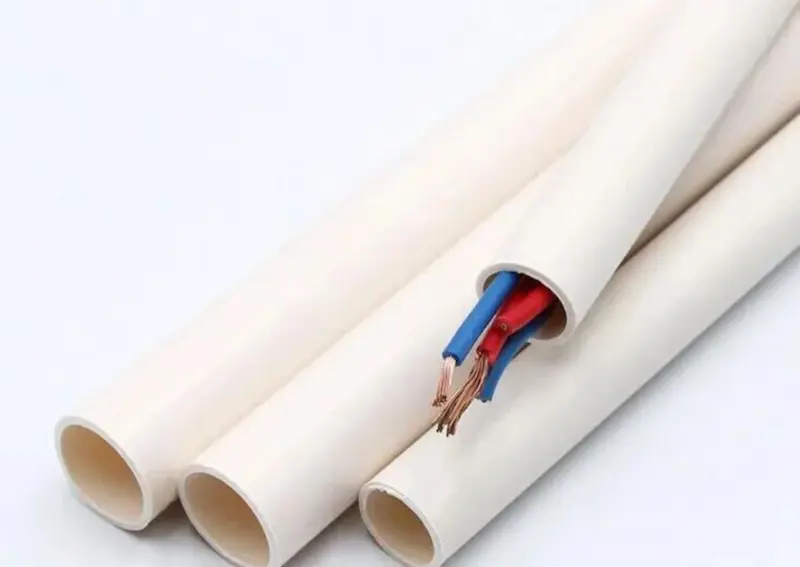
II. By Pipe Wall Structure: Solid Wall vs. Corrugated Wall
PVC electrical conduits are mainly divided into two categories based on their wall structure:
solid wall conduits and corrugated wall conduits.
Solid Wall Conduits
- Smooth inner and outer walls, high mechanical strength, low resistance to wire threading;
- Mainstream in the market, wide range of applications.
Applicable Scenarios: Most scenarios including high-voltage and low-voltage wiring, wall burial, underground burial, and concrete pouring.
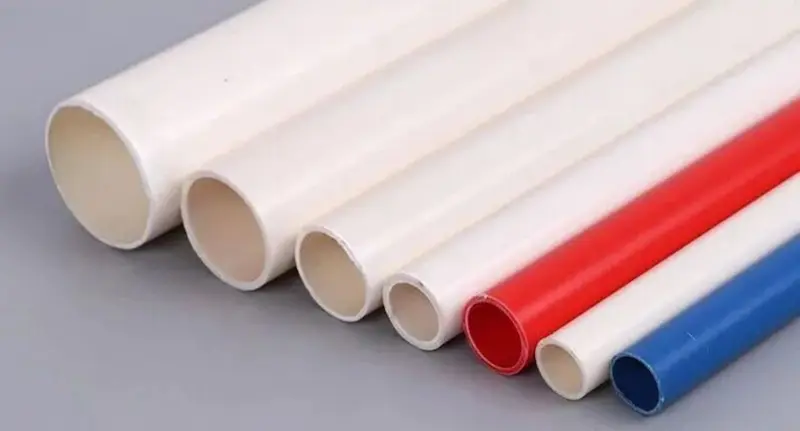
Corrugated Conduits
- Wavy outer wall, good flexibility, can be bent by hand;
- Suitable for spaces with many bends and complex wiring.
Applicable Scenarios: Low-voltage wiring, data conduits, and places requiring flexible routing.
Note that corrugated conduits have weak compressive strength and are not suitable for underground burial or high-stress scenarios, otherwise they are easily flattened or deformed.
Note that corrugated conduits have weak compressive strength and are not suitable for underground burial or high-stress scenarios, otherwise they are easily flattened or deformed.
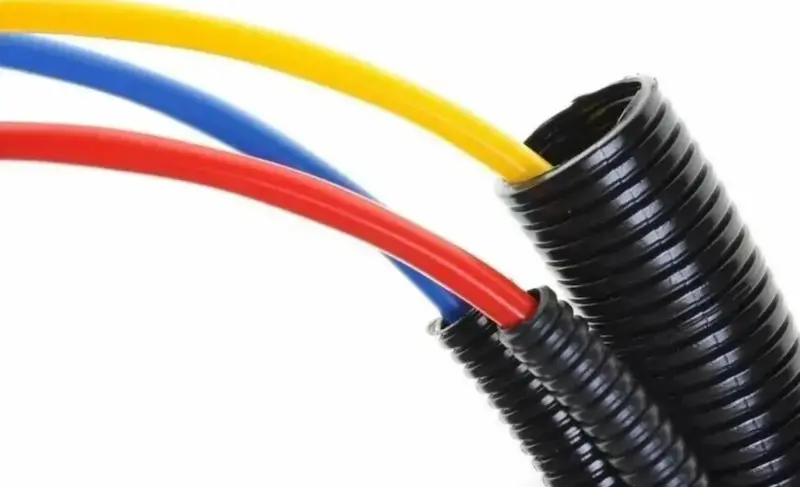
III. By Temperature Rating: From -25°C to 90°C
As is well known, PVC material generally has poor temperature resistance. Its mechanical properties and flexibility are greatly affected by ambient temperature. Based on different temperature ratings, PVC electrical conduits can be divided into the following types:
-25°C: Strongest freeze resistance
Minimum operating temperature -25°C, specifically designed for cold regions, suitable for areas with low winter temperatures such as Northeast, North, and Northwest China, as well as outdoor or low-temperature environments during winter.
-15°C: Sufficient for most areas
Minimum operating temperature -15°C, with the widest range of applications. Suitable for indoor and outdoor use in most parts of the country, it is currently the most commonly used temperature rating for home decoration and conventional projects.
-5°C: For ordinary climate conditions
Minimum operating temperature -5°C, suitable for areas without severe cold throughout the year, mainly used for indoor or normal temperature wiring in southern regions.
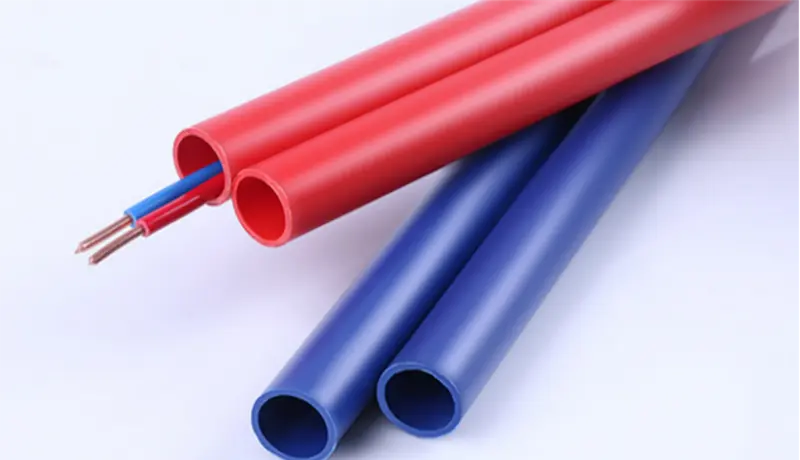
Type 90: High Temperature Resistance
Withstanding continuous temperatures up to 90℃, suitable for equipment rooms, electrical distribution shafts, computer rooms, kitchen ceilings, and areas with dense spotlights, preventing softening and deformation under high temperatures.
Type 90/-25: Strongest Adaptability
Simultaneously possessing low-temperature resistance up to -25℃ and high-temperature resistance up to 90℃, suitable for high-standard projects with drastic temperature fluctuations or complex environmental conditions. A one-stop solution with the strongest overall performance.
Recent News
12 6 月, 2026
3 4 月, 2026
10 4 月, 2025