



Celebrating the Dragon Boat Festival: Embrace Tradition, Bless Peace
As the summer breeze sweeps gently and the fragrance of wormwood and bamboo leaves fills the air, we welcome the time-honored Chinese traditional festival — the Dragon Boat Festival, also known as Duanwu Festival.
Observed on the fifth day of the fifth lunar month, this ancient celebration boasts a history of more than 2,000 years and is honored as a UNESCO Intangible Cultural Heritage of Humanity, standing as a precious treasure of Chinese traditional culture.
Rooted in profound historical heritage, the festival originates from the commemoration of Qu Yuan, a loyal and patriotic poet in ancient China. For thousands of years, it has evolved from a simple ritual of remembrance into a vibrant festival that integrates tribute to ancestors, cultural inheritance, and prayers for health and peace. It carries the Chinese nation’s sincere pursuit of patriotism, unity, and good fortune.
Rooted in profound historical heritage, the festival originates from the commemoration of Qu Yuan, a loyal and patriotic poet in ancient China. For thousands of years, it has evolved from a simple ritual of remembrance into a vibrant festival that integrates tribute to ancestors, cultural inheritance, and prayers for health and peace. It carries the Chinese nation’s sincere pursuit of patriotism, unity, and good fortune.
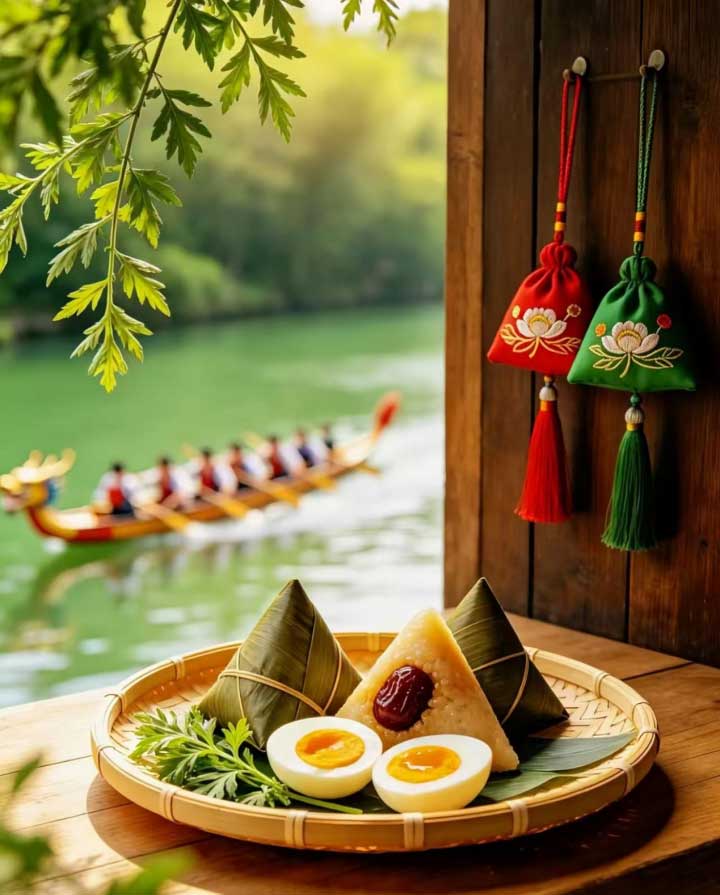
The charm of the Dragon Boat Festival lies in its vivid and warm traditional customs that have been passed down through generations. Dragon boat racing is the most spectacular scene of the festival. On rippling rivers, teams paddle in perfect unison, with dragon boats cutting through the water amid thunderous cheers. The thrilling competition symbolizes solidarity, perseverance, and vigorous vitality, embodying the enterprising spirit of forging ahead together.
Zongzi, the iconic delicacy of the festival, wraps the most tender warmth of summer and tradition. Glutinous rice is paired with various fillings and wrapped in fresh reed or bamboo leaves, steaming with a faint natural fragrance. Whether sweet or savory, each zongzi carries the simple blessings of health and reunion, becoming the most tasteful memory of the festival for every Chinese person. Beyond racing boats and tasting zongzi, people also hang wormwood and calamus at their doors, wear colorful silk threads, and brew realgar wine. These age-old customs convey people’s sincere wishes to ward off diseases, dispel bad luck, and pray for a safe and healthy year, reflecting the unique wisdom of ancient Chinese people adapting to seasonal changes and pursuing a better life.
Zongzi, the iconic delicacy of the festival, wraps the most tender warmth of summer and tradition. Glutinous rice is paired with various fillings and wrapped in fresh reed or bamboo leaves, steaming with a faint natural fragrance. Whether sweet or savory, each zongzi carries the simple blessings of health and reunion, becoming the most tasteful memory of the festival for every Chinese person. Beyond racing boats and tasting zongzi, people also hang wormwood and calamus at their doors, wear colorful silk threads, and brew realgar wine. These age-old customs convey people’s sincere wishes to ward off diseases, dispel bad luck, and pray for a safe and healthy year, reflecting the unique wisdom of ancient Chinese people adapting to seasonal changes and pursuing a better life.
Time-honored traditions never fade; they thrive with inheritance. The Dragon Boat Festival is not merely a seasonal celebration, but a spiritual carrier that connects history and the present, inherits culture and warmth. It passes down the spirit of patriotism and teamwork, and conveys the eternal pursuit of peace, health, and reunion.
On this refreshing summer festival, we extend our sincere festive wishes to every partner and friend. May the fragrance of zongzi bless you with peace and joy, and may the spirit of the dragon boat inspire you to move forward bravely. Wishing everyone a healthy, harmonious, and prosperous Dragon Boat Festival!
Recent News
12 6 月, 2026
3 4 月, 2026
10 4 月, 2025